July 2026 |
|
Inside this edition:
-
Submit a Poster Abstract for MNPQC’s Perinatal Improvement Summit
-
Be A Part of Our Team: Hiring a Development Manager/Director
-
MNPQC is Recruiting Participants for a Patient Experience Survey
-
Upcoming Perinatal Education ECHO Session - Immediate Postpartum Contraception: A Primer for Clinicians Doing Deliveries
-
Mark Your Calendars: Our Rural IMPACT Sprint Begins This September
-
The Perinatal Improvement Summit - Early Bird Pricing Ends August 1!
-
Discover Perinatal Events Happening on the State and National Level
-
Teardrops with Milkdrops: A Bereavement Program from the Minnesota Milk Bank for Babies
-
Recap of 2025 State Maternal Mental Health Legislation from the Policy Center for Maternal Mental Health
|
|
|
|
|
|
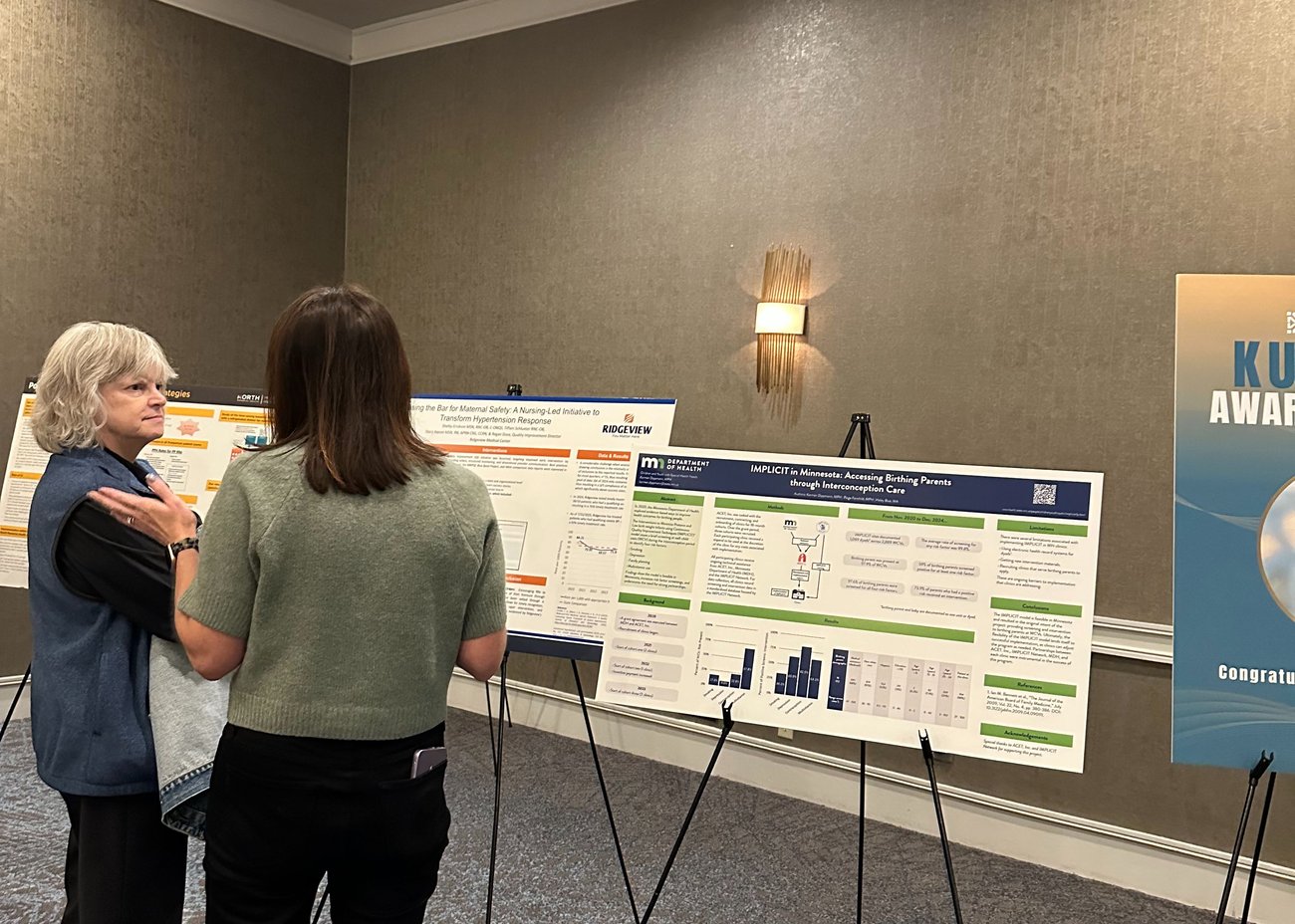 |
Submit a Poster Abstract for MNPQC’s Perinatal Improvement Summit |
|
Showcase your research, quality improvement work, insights, or best practices in perinatal and infant care by sharing a poster at MNPQC's 2026 Perinatal Improvement Summit on October 27, 2026, in Minneapolis. We are now accepting poster abstract submissions from individuals interested in sharing their work with perinatal professionals from across Minnesota and beyond.
Submit your abstract by September 1, 2026, for consideration! |
| Learn More |
|
|
|
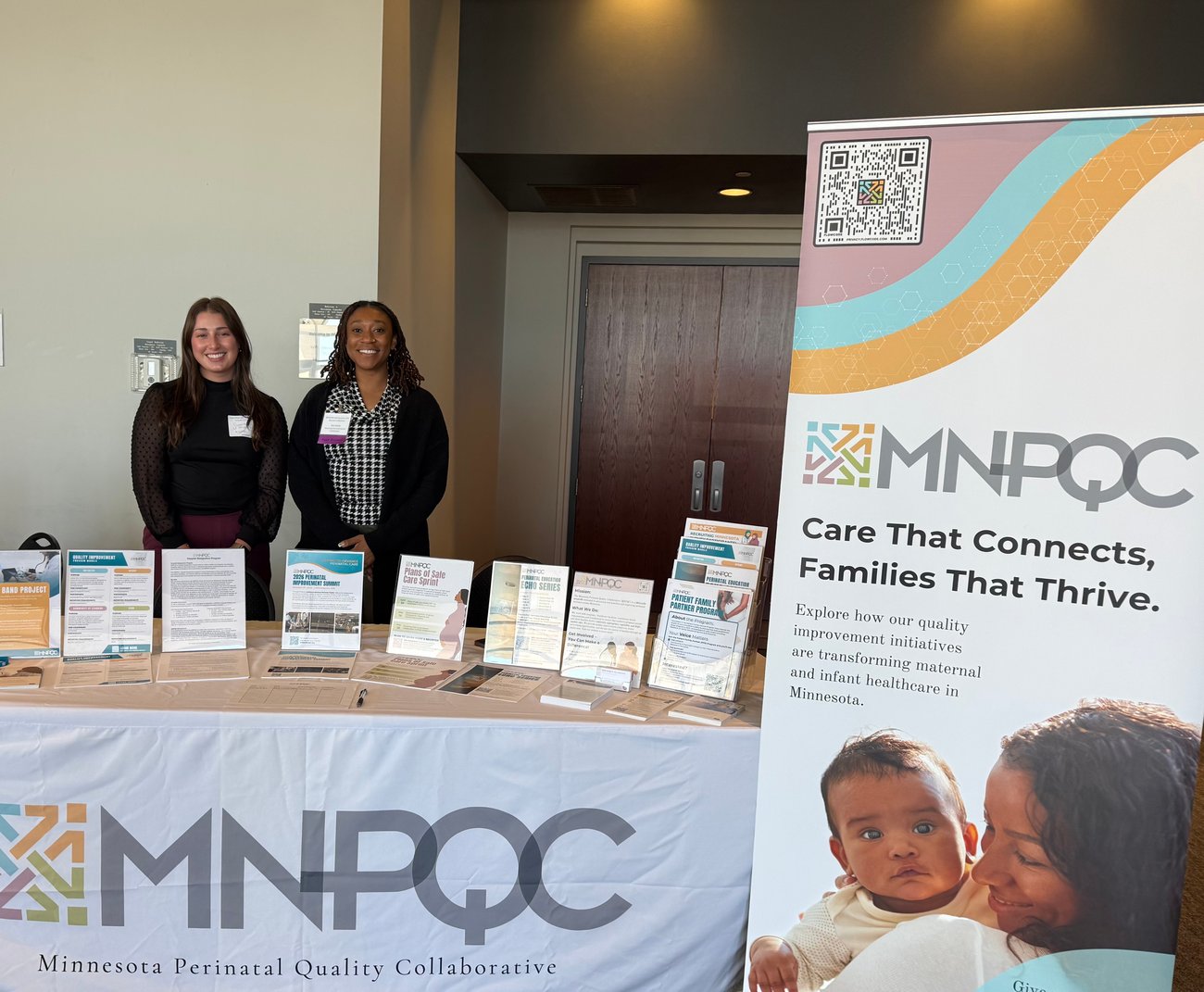 |
Be A Part of Our Team: Hiring a Development Manager/Director |
|
As a nonprofit organization, MNPQC is committed to building sustainable funding to support and grow our quality improvement work, and this is needed now more than ever. The Development Manager/Director is a newly created leadership role that will be responsible for building fundraising systems and processes from the ground up while leading all development efforts. The Director of Development will play a key role in donor engagement, major gifts, and foundation funding.
Interested in learning more? Read the full job description and how to apply on our website! Applications will be accepted on a rolling basis until the position is filled.
|
| Join Our Team |
|
|
|
 |
MNPQC is Recruiting Participants for a Patient Experience Survey |
|
Are you a Minnesotan who has experienced substance use during pregnancy in the last 5 years? If so, we want to hear from you! Share your pregnancy experience through an anonymous online survey. How to Participate: To determine eligibility, please complete the brief, 2-minute screening questionnaire linked below. If eligible, you can expect to receive an email with the official survey link within 1-2 business days. Eligible respondents who successfully complete the survey will receive a $20 gift card.
Organizations: Are you interested in sharing this survey with the individuals you serve? For more information, please contact QI@minnesotaperinatal.org.
|
| Share Your Experience |
|
|
|
 |
Upcoming Perinatal Education ECHO Session - Immediate Postpartum Contraception: A Primer for Clinicians Doing Deliveries |
|
Join us tomorrow, July 16, 2026, from 12:00 - 1:00 pm, as Dr. Zerden, an expert who supports research on long-acting reversible contraception (LARC) for the American College of Obstetricians and Gynecologists Foundation, will present to listeners about the benefits of LARC for postpartum patients, the importance of postpartum contraception, including available options, the safety and effectiveness of immediate postpartum LARC, and how shared decision-making can support patients in choosing contraceptive methods that align with their goals and needs.
With up to 40% of patients not returning for their 6-week postpartum visit, it is important to consider how we can create opportunities to provide education, resources, and support earlier in the postpartum period. Postpartum care is a critical time to connect with patients about maternal mental health, recovery, early parenting questions, and contraception options.
|
| Don't miss out! Register Today |
|
|
|
 |
Mark Your Calendars: Our Rural IMPACT Sprint Begins This September |
|
Calling all professionals working in rural healthcare settings and Critical Access Hospitals! Join us this September for MNPQC's Rural Improving Maternal & Perinatal Access, Care, and Teamwork (IMPACT) Sprint. During six interactive sessions, participants will engage in collaborative discussions, share successful practices, and explore quality improvement strategies to address challenges unique to rural maternity care while strengthening obstetric emergency readiness.
Attend all six sessions or join those that best fit your schedule and interests. While the content is designed for clinicians, nurses, quality improvement professionals, and hospital administrators working in rural healthcare settings and Critical Access Hospitals, everyone is welcome to participate.
Sprint Schedule:
All Sprints will be held on Thursday afternoons, from 12 to 1 PM.
-
September 17, 2026: Foundations of Obstetric Emergency Readiness
-
October 15, 2026: Recognition & Early Warning Systems
-
November 12, 2026: Team Roles, Communication & Drill Coordination
-
December 17, 2026: Hemorrhage Readiness - Supplies & Systems
-
January 14, 2026: Response & Transfer Coordination
-
February 11, 2026: Sustainability, Data & Culture
|
| Learn More and Register |
|
|
|
 |
The Perinatal Improvement Summit - Early Bird Pricing Ends August 1 |
|
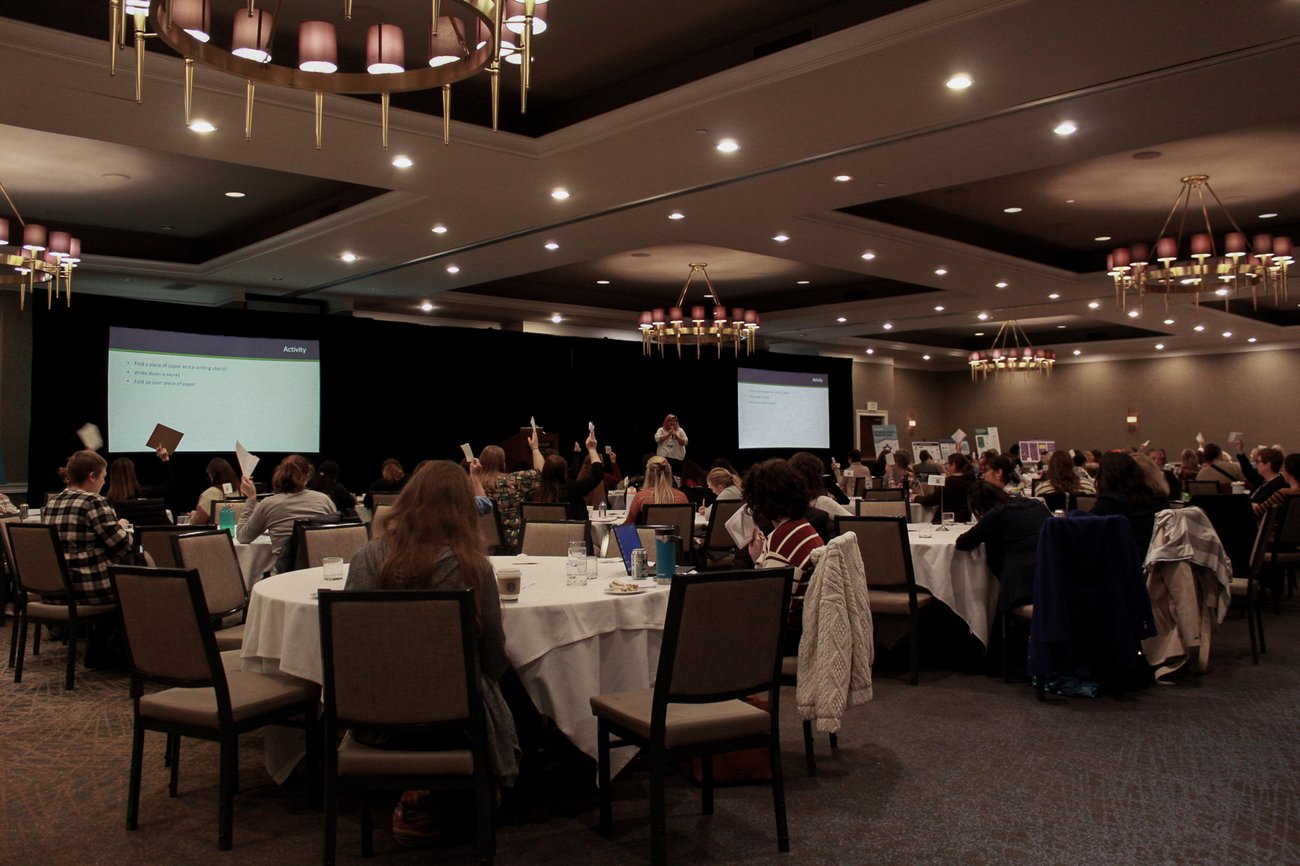
Early bird registration for MNPQC's Perinatal Improvement Summit ends August 1! Secure your spot today and join more than 200 healthcare professionals, community leaders, advocates, and partners from across Minnesota for a day of learning, collaboration, and connection on October 27, 2026, in Minneapolis.
This year's theme, Uniting to Advance Perinatal Health, reflects the collective effort needed to create meaningful change. Whether you're a clinician, nurse, doula, public health professional, community organization, advocate, or family partner, this summit offers an opportunity to share ideas, build relationships, and explore strategies that support safe, respectful, and high-quality care for all families. |
| Attend Our Summit |
|
|
|
|
|
Teardrops with Milkdrops: A Bereavement Program from the Minnesota Milk Bank for Babies |
|
After the loss of a baby, families may continue to experience lactation and have questions about their options. Teardrops with Milkdrops, a bereavement program offered by the Minnesota Milk Bank for Babies, provides compassionate support and education for parents navigating life after infant loss. For parents who choose to continue expressing milk, the program offers the opportunity to donate breast milk as a meaningful way to honor their baby while helping nourish other infants in need. The program also provides information and support for families who choose not to donate, recognizing that every family’s circumstances, needs, and grieving journey are unique.
The Milk Bank encourages families to speak with their healthcare provider or a lactation consultant about these options and the support available. Access the bereavement program brochure and learn more about the Milk Bank below.
|
| Learn More |
|
|
|
Recap of 2025 State Maternal Mental Health Legislation from the Policy Center for Maternal Mental Health |
|
With the growing awareness nationwide of maternal mental health (MMH), the Policy Center for Maternal Mental Health is an excellent resource for staying informed about emerging state legislation. Each year, the Policy Center publishes an annual report that summarizes maternal mental health bills introduced across the United States, highlights enacted laws, and, new this year, examines how legislation may influence outcomes for pregnant and postpartum people. 2025 marks the third annual report developed by the Policy Center, and its findings show a 46% increase in the number of MMH bills introduced by state legislatures. In Minnesota, four new MMH bills were introduced, with H.F.2 and S.F.6 ultimately being enacted into law.
The Policy Center also maintains a dedicated state policy webpage with resources to support legislators, advocates, and other stakeholders. These resources include policy guidance, summaries of enacted and pending legislation, model policies, and tools to help advance MMH policy at the state level.
|
| Read the Report |
|
|
|
|